Logging Off for Good: The Generation That Built the Internet Is Walking Away From It
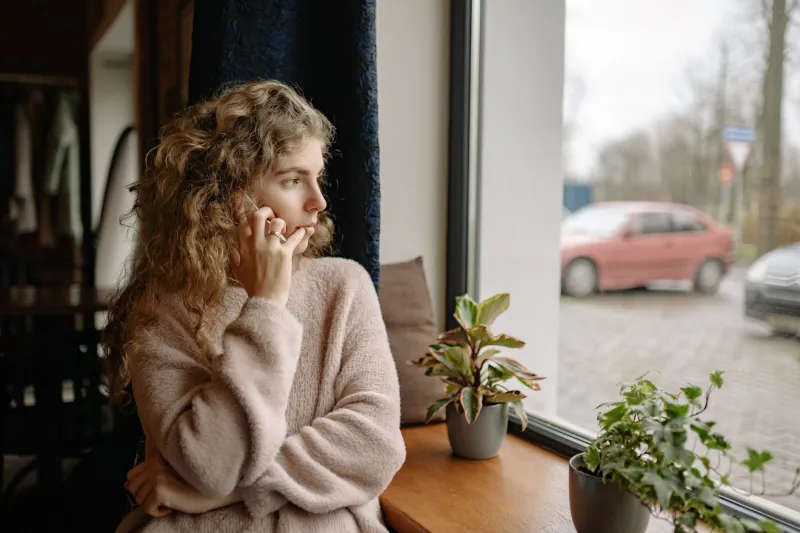
If you want to understand where culture is headed, watch what twenty-two-year-olds are doing when nobody's looking. Right now, a growing number of them are doing something that would have seemed genuinely radical five years ago: they're putting down their phones, going private, or deleting apps altogether — and they're not making a big announcement about it.
That last part is kind of the whole point.
The Kids Are Not, In Fact, Online
The data has been creeping in for a while, and it paints a complicated picture. TikTok remains enormous, obviously. Instagram isn't dead. But the relationship that younger users have with these platforms has fundamentally shifted. Where previous generations of social media users were expanding — posting more, sharing more, building audiences — a significant slice of Gen Z is contracting. Going private. Archiving old posts. Replacing broadcast-style content with small, quiet group chats.
Some are moving to platforms like BeReal (when it was still a thing), or Locket, or just defaulting to iMessage photo dumps sent to twelve people who actually matter to them. Others are embracing what some are calling "posting less" as an almost philosophical stance — a deliberate rejection of the visibility economy they grew up inside.
And then there are those who are logging off entirely. Not dramatically. No farewell posts. Just... gone.
You Can't Quit Something You Never Chose
To understand why this is significant, you have to understand what it means to have grown up as content. Gen Z didn't choose to be the first generation documented from birth on social media — their millennial parents did that for them. By the time they were old enough to have their own accounts, the infrastructure was already in place. The algorithm was already waiting.
Growing up in that environment creates a particular kind of self-consciousness. You learn early that your life has an audience, that moments have potential value beyond themselves, that you are — in some sense — always performing. That's not a melodramatic reading. It's just the mechanics of the platforms they were handed.
So when someone from that generation decides to stop posting, it's not a small thing. It's an identity negotiation. Who are you when you're not being watched? What does an experience mean if it doesn't exist online? These aren't rhetorical questions. For a lot of young people, they're genuinely disorienting ones.
What 'Posting Less' Actually Means
Here's where it gets culturally interesting. "Posting less" has become its own kind of aesthetic — which is either proof that Gen Z can't escape the performance trap, or proof that they're clever enough to make opting out feel intentional and cool. Maybe both.
The "quiet life" content that's been circulating on TikTok — soft focus videos of books, coffee, slow mornings, analog hobbies — is technically still content. It's still posted. But it signals a different set of values: slowness over hustle, privacy over exposure, depth over reach. Whether that's genuine or performative is almost beside the point. The fact that this is what's resonating says something real about collective exhaustion.
There's also a class dimension worth noting. Opting out of social media is, in some ways, a privilege. For creators who built livelihoods on these platforms, stepping back isn't a vibe shift — it's a financial decision with real consequences. The influencer economy, which Gen Z helped construct, is now facing a strange internal rebellion from the very demographic that made it work.
The Influencer Economy Feels the Shake
Brands are noticing. The influencer marketing model that dominated the last decade was built on the assumption of an engaged, growing audience of young people who trusted peer recommendations over traditional advertising. That model is wobbling.
Engagement rates have been declining across platforms. The parasocial trust that made influencer marketing so potent has been eroded by years of undisclosed ads, manufactured authenticity, and the general sense that everything is a pitch. Gen Z, who have finely tuned BS detectors and grew up watching the sausage get made, are particularly skeptical.
Brands are scrambling to adapt — leaning into micro-influencers, community-based marketing, and creator partnerships that feel less transactional. But the underlying challenge remains: if the audience is logging off, the whole ecosystem has to reconfigure.
Burnout or Evolution?
The honest answer is probably both, and the distinction matters less than it seems. Platform cycles are real — MySpace to Facebook to Instagram to TikTok — and every generation eventually abandons the spaces their predecessors built. There's nothing new about that.
What is new is the self-awareness Gen Z brings to the exit. They're not just moving to the next app. Some of them are genuinely questioning the premise: that life should be documented, that audiences should be cultivated, that visibility equals value. That's a more fundamental critique, and if it sticks — even partially — it has long-term implications for how digital culture works.
There's also something quietly radical about choosing to live in ways that leave fewer traces. In an era when attention is the most monetized resource on earth, refusing to give yours away is an act with real weight.
The Feed Isn't Going Anywhere — But Neither Are They
None of this means social media is dying. It's not. The platforms will adapt, new ones will emerge, and plenty of Gen Z users will stay plugged in. But the unconditional relationship — the one where you post because that's just what you do, where the algorithm is the organizing principle of your social life — that's the thing that's quietly ending.
What comes next is less certain. Smaller communities. More deliberate sharing. Lives that exist, at least partially, outside the frame.
For a generation that never really got to choose whether to be online in the first place, that might be the most personal thing they've ever done.