The Aesthetic Era Is Over — And Honestly? Good Riddance
Somewhere around 2020, the internet decided that every person needed a vibe. Not just a style, not just a taste — a fully branded, Pinterest-boardable, TikTok-searchable aesthetic. You were cottagecore or you were dark academia. You were clean girl or you were Y2K maximalist. You were a type, and your type needed to be legible, consistent, and hashtaggable at all times.
For a while, people played along. The aesthetic economy exploded. Entire micro-industries grew up around helping people find their "core" and build a wardrobe (and a personality) around it. It was, in retrospect, a very strange moment — the Instagram era's final, frantic attempt to turn human beings into coherent brands.
And now? The whole thing is quietly falling apart. And it's kind of beautiful.
How We Got Here: The Branding of the Self
To understand why aesthetic chaos is having a moment, you have to understand what came before it. The Instagram era, roughly 2012 to 2020, was defined by a particular kind of aspirational coherence. Your feed was a mood board. Your outfits were a statement. Everything had to hang together, tell a story, communicate a consistent identity to the strangers who might stumble across your profile.
This wasn't entirely new — people have always used clothing and style to signal belonging and identity. But the internet industrialized it. Suddenly your aesthetic wasn't just something you lived; it was something you performed, daily, for an audience. And audiences, it turns out, like things that are easy to categorize.
TikTok accelerated this into hyperdrive. The "core" suffix became a content machine: gorpcore, cottagecore, normcore, dark academia, light academia, coastal grandmother, mob wife, quiet luxury. Each one had its own aesthetic vocabulary, its own product recommendations, its own community of practitioners. If you were paying attention, you could almost feel the pressure to pick a lane and stay in it.
The problem is that actual human beings don't work that way.
The Contradiction Is the Point
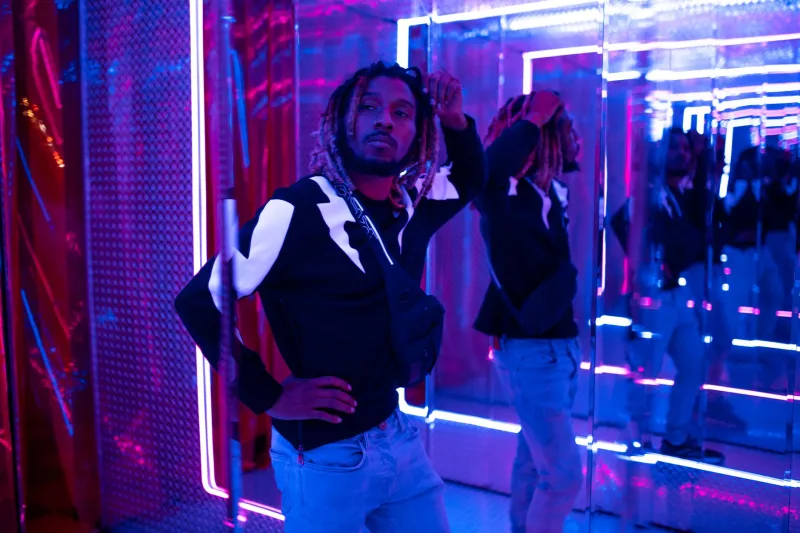
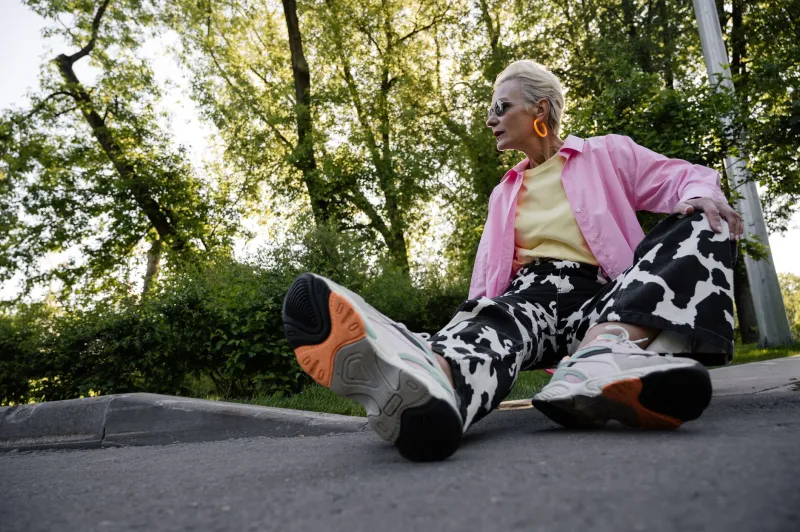
Here's what's happening on the ground, in closets and on feeds across the country: the cottagecore girl is wearing platform boots. The minimalist just bought a sequined blazer. The dark academia devotee spent the weekend in a neon two-piece at a pool party and posted all of it without a single apologetic caption.
Gen Z, specifically, seems to be leading a quiet rebellion against the tyranny of aesthetic consistency. And they're not doing it loudly — there's no manifesto, no movement name (yet). It's more like a collective shrug, a gradual loosening of the self-imposed rules that made personal style feel like homework.
Call it aesthetic code-switching. Call it vibe pluralism. Call it, as some corners of the internet have started to, "being a person."
The logic is simple once you say it out loud: no real human being has a single aesthetic. You contain multitudes. You might feel like linen and wildflowers on a Sunday morning and like leather and attitude by Saturday night. You might love the intellectual romance of dark academia as a concept while also being deeply, unironically devoted to a hot pink going-out top. These things are not contradictions. They're just moods.
Why the Collapse Feels Like Relief
Talk to people who are actively embracing this aesthetic free-for-all, and a word that comes up a lot is relief. Relief at not having to justify a purchase because it doesn't "fit the vibe." Relief at not feeling like a fraud when your outfit doesn't match the identity you've been performing online. Relief at dressing for yourself, in the moment, without consulting a brand guideline you wrote in your head three years ago.
There's also something politically resonant happening here, even if it's not being articulated in explicitly political terms. The pressure to maintain a coherent personal brand was never really neutral — it was deeply tied to consumer culture, to the idea that your identity is something you build through purchasing decisions, and that those decisions should be legible and marketable. Opting out of that framework, even partially, is a small act of refusal.
It's also, frankly, more interesting. The most compelling people in fashion history — the ones who actually moved the needle — were rarely people who stuck to a lane. They were the ones who crashed lanes together, who wore the unexpected thing with total conviction, who treated their wardrobe as a living experiment rather than a finished thesis.
The Algorithm Didn't Create You, and It Can't Contain You
There's a version of this story where aesthetic chaos gets repackaged and sold back to us as a new trend — "eclectic core," maybe, or "contradiction dressing" — and the whole cycle starts again. That's how these things tend to go. The rebellion gets aestheticized, the aestheticization gets hashtagged, the hashtag becomes a shopping category, and we're back where we started.
But there's something about this particular moment that feels a little more durable. Because what's being rejected isn't just a specific aesthetic — it's the whole premise that style should be a coherent, brandable identity in the first place. And that's a harder thing to commodify.
Gen Z grew up watching the Instagram era's obsessive self-curation produce a generation of people who were anxious, exhausted, and weirdly disconnected from their own tastes. The backlash isn't just against cottagecore or clean girl aesthetics specifically — it's against the whole apparatus of performing a self for algorithmic approval.
Dressing like a contradiction isn't a style failure. It's a statement that the categories were always kind of made up, and you were never required to fit neatly inside one.
Wear the Weird Combination
So here's where we land: the great genre collapse of personal style is real, it's ongoing, and it's producing some of the most genuinely interesting fashion moments we've seen in years. The people who are done maintaining a coherent aesthetic aren't losing their sense of style — they're finding it, maybe for the first time, underneath all the brand-building and category-sorting.
Your style doesn't have to tell a single, consistent story. It can be a bunch of stories, some of which contradict each other, all of which are true depending on the day.
Wear the weird combination. Post the outfit that doesn't fit your "thing." Let your aesthetic be a little chaotic and a lot human.
The era of the perfectly curated self is over. What comes next is messier and more interesting and, honestly, a lot more fun.