Your Therapist Has 200K Followers and You've Never Even Booked a Session
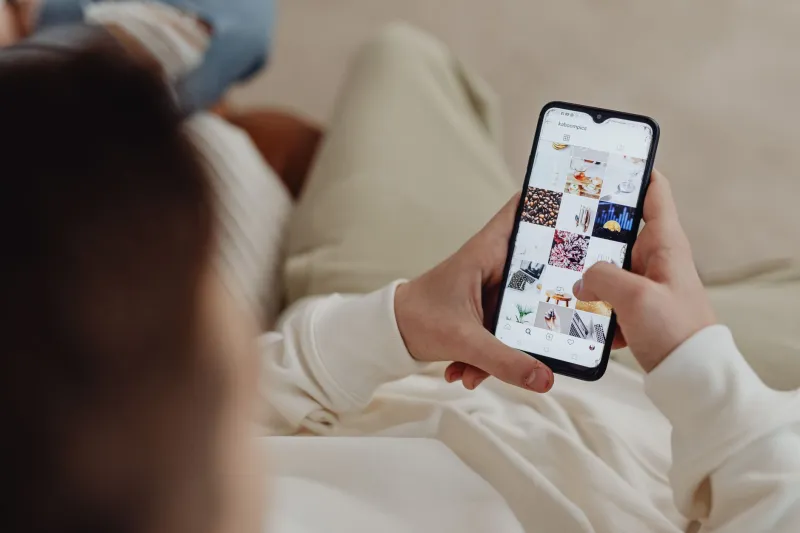
There's a therapist you follow. She posts Reels about attachment styles and nervous system regulation. She shares voice memos about her own anxiety. She talks directly into the camera like she's speaking specifically to you — and honestly, sometimes it feels like she is. You've watched probably forty hours of her content. You've never made an appointment.
This is not a niche experience.
A whole generation of people has quietly built something that looks like a therapeutic relationship — without the co-pay, the waitlist, or the awkward silence at minute forty-seven. Mental health creators, many of them licensed professionals, have become some of the most emotionally significant figures in people's online lives. And the lines between public education, parasocial comfort, and actual care are getting blurrier by the week.
The Appeal Is Real, and It Makes Sense
Let's be clear about something: the rise of mental health content online is not inherently bad. Access to psychological language — understanding what a trauma response actually looks like, recognizing anxious attachment patterns, learning that your people-pleasing has a name — has genuinely helped people. For a lot of folks, especially those who grew up in households where mental health was never discussed, this content was the first time they heard their internal experience described out loud.
That matters. Destigmatization doesn't happen in a vacuum. It happens when someone posts a TikTok at 11pm and a kid in rural Ohio watches it three times because it finally explains something they couldn't articulate.
But there's a difference between psychoeducation and therapy. And the internet is very good at making that distinction feel unnecessary.
When Information Starts to Feel Like Care
Here's where it gets complicated. The best mental health creators don't just share facts — they share themselves. They post about their own struggles with burnout. They show up on Stories looking tired. They talk about the hard weeks and the breakthroughs. They're vulnerable, in the exact way we're told good therapy looks.
And that vulnerability creates a bond. Not a fake one — the feelings are real. The sense of being understood is real. But the relationship is fundamentally one-directional in a way that can quietly distort your expectations of what support actually looks like.
Real therapy is uncomfortable in ways that Instagram is not. Your actual therapist asks the questions you don't want to answer. They notice when you're deflecting. They hold you accountable to things you said three sessions ago. The parasocial therapist never challenges you. She can't. She doesn't know you exist.
That asymmetry isn't a bug — it's the entire architecture of social media. But when the content is emotionally charged and professionally credentialed, the asymmetry starts to feel less obvious.
The Substitution Problem Nobody Wants to Admit
For some people, following mental health creators has become a genuine substitute for seeking actual help. And they usually don't frame it that way — they frame it as "doing the work" or "learning about themselves." Which, to be fair, isn't entirely wrong. But consuming content about healing and actually processing your stuff with a trained professional are not the same activity.
There are real barriers to therapy in the US — cost, availability, finding someone who actually gets your specific experience. Those barriers are legitimate and they shouldn't be minimized. But for a growing number of people, the barrier isn't systemic. It's that the Instagram version of therapy is easier, more available, and doesn't require you to be uncomfortable on purpose.
Watching someone explain avoidant attachment is not the same as sitting with a therapist who asks why you keep choosing emotionally unavailable partners. One feels like insight. The other feels like exposure. Guess which one actually moves the needle.
The Creator's Side of This Is Complicated Too
It's worth acknowledging that licensed professionals who build large online followings are navigating something genuinely tricky. Many of them started creating content specifically to make mental health information more accessible — a real and worthwhile goal. But audience growth changes things.
When you have hundreds of thousands of followers who feel deeply connected to you, the ethical weight of that relationship becomes significant. Some creators are thoughtful about this — they regularly remind their audiences that content is not therapy, that they should seek professional support, that a Reel about anxiety cannot replace a diagnosis. Others are less careful, leaning into the intimacy because it drives engagement.
The incentive structure of social media doesn't reward professional boundaries. It rewards the feeling of closeness. That's not a criticism of individual creators — it's a structural problem with a platform that monetizes parasocial attachment.
What You're Actually Looking For
If you follow a therapist online and feel genuinely seen by their content, that feeling is pointing at something real — a need for connection, for understanding, for someone to reflect your internal experience back at you without judgment. That need is valid.
The question is whether you're letting the content meet that need just enough that you never seek the thing that would actually meet it more fully.
There's a version of following mental health creators that works: it normalizes the idea of therapy, builds your vocabulary for your own experiences, and lowers the activation energy for eventually booking an appointment. And there's a version that becomes a comfortable substitute — just emotionally nourishing enough to take the edge off, not enough to create real change.
Most of us are somewhere in between, which is exactly where it's hardest to notice what's happening.
It's Not About Deleting the App
This isn't a call to unfollow everyone with a therapy license and a ring light. The content has value. The creators, many of them, are doing genuinely good work in a space that needed it.
But it might be worth asking yourself: when's the last time a Reel made you feel seen, and what did you do with that feeling? Did it move you toward something — a conversation, an appointment, a moment of real reflection — or did it just feel good and then scroll away?
The therapist with 200K followers is not your therapist. She's a person you've decided to trust from a distance, which is its own interesting thing to examine. Maybe with an actual therapist. One who knows your name.