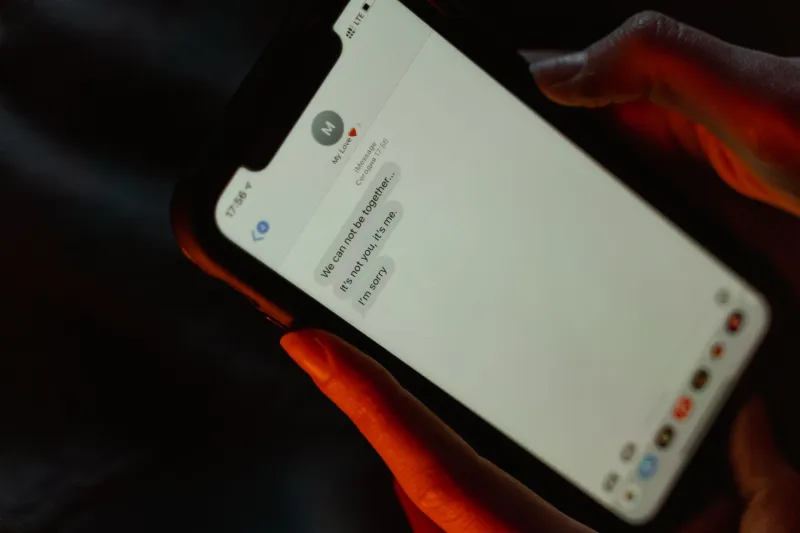
Your Group Chat Has Fifteen Members and Zero Real Conversations

There's a group chat on your phone right now. Maybe it's called something like "the crew" or "🔥🔥🔥" or your college roommates' last names smooshed together. It has somewhere between five and fifteen people in it. It pings constantly. And if someone asked you to name your closest friends, at least half of those people would make the list.
But when's the last time you actually talked to any of them? Like, talked talked?
This is the strange little trap we've all walked into without noticing. The group chat has become a social institution — a place where friendships are technically maintained, where inside jokes live forever, where someone always drops a meme at exactly the right moment. It feels like community. It performs like community. And yet, for a lot of people, it's quietly become a substitute for something deeper that's slowly stopped existing.
The Performance Starts the Second You Open the Keyboard
Here's something most people won't admit: you edit yourself in the group chat. Not dramatically, not consciously — but you do it. You think about whether the thing you're about to say is funny enough, relevant enough, or whether it'll land the way you want it to. You reconsider the voice memo. You delete the message that feels a little too real and replace it with something lighter.
What you're doing, whether you realize it or not, is performing a version of yourself for an audience. And that audience is your "friends."
It makes sense when you think about it. A group chat has all the social dynamics of a room full of people — there are hierarchies, there are the ones who set the tone, there are the lurkers who only react with emojis, and there's always that one person whose approval you're low-key trying to get. You're not just talking. You're being perceived. And being perceived changes everything about how you communicate.
The result is a strange kind of curated intimacy. You share things — your bad day, your dating drama, the unhinged thing your coworker said — but you share them in a way that's been lightly packaged for group consumption. The rawness gets sanded down. The vulnerability gets converted into content.
The Anxiety of Going Quiet
And then there's the flip side: what happens when you don't text back.
For a lot of people, going quiet in a group chat doesn't feel like rest. It feels like social debt accumulating. Every message you don't respond to is a small withdrawal from a balance you're not sure you have. You start to wonder if people have noticed. You wonder if you're the one who doesn't text back — a label that carries more social weight than it probably should.
This is anxiety that previous generations of friendship simply didn't have. When you couldn't reach someone, you just... couldn't reach them. Now the chat is always there, always open, always quietly tracking whether you've read the last forty-seven messages. The little "seen" receipt is doing a lot of psychological damage that nobody's fully accounted for yet.
The irony is that the group chat was supposed to make staying connected easier. And it did — just not in the way anyone meant. It made the appearance of connection frictionless while making actual connection feel increasingly optional.
When the Chat Becomes the Whole Relationship
At some point, for a lot of friendships, the group chat stopped being a supplement to the relationship and became the relationship itself. You don't make plans. You don't call. You don't sit across from each other and let a conversation go somewhere unexpected. You just... exist in the chat together, orbiting each other's highlight reels, sending reaction GIFs to the moments you're allowed to see.
This isn't entirely anyone's fault. Life gets complicated. People move, schedules get brutal, and the chat genuinely is the most efficient way to maintain some kind of contact across distance and time zones. But efficiency and intimacy are not the same thing, and somewhere along the way we started treating them like they were.
Real friendships — the kind that actually sustain people — require something the group chat structurally cannot provide: the experience of being fully known by someone. Not your funniest self. Not your most relatable self. Just you, unedited, in the middle of something hard, with someone who's willing to sit in that with you.
The group chat doesn't have space for that. It's too public, too performative, too aware of its own audience.
The Loneliness That Doesn't Look Like Loneliness
What makes this particular brand of modern loneliness so tricky is that it's invisible — even to the person experiencing it. You have the receipts of connection. The chat history is thousands of messages long. You can scroll back and find proof that these people know you, that they've shown up, that there's a real history here.
But proof of contact isn't the same as proof of closeness. And a lot of people are discovering that gap — usually at the exact moment they need something real. A health scare, a job loss, a relationship falling apart. The moment when you open the group chat and realize you don't actually know how to say what you need to say in this format, to this audience, in this register.
That's when the illusion gets expensive.
It's Not the Chat's Fault — But It Might Be Ours
None of this is an argument for nuking your group chat or dramatically announcing that you're going back to phone calls only. That's not realistic, and honestly, group chats do bring real joy. The memes, the shared language, the low-stakes daily check-in — that stuff has genuine value.
But it's worth being honest about what the chat is and what it isn't. It's a lobby, not a living room. It's great for keeping the lights on in a friendship, but it can't do the deeper work. That part still requires showing up — a real conversation, a direct message that says "hey, are you actually okay," a phone call that doesn't have an agenda.
The group chat will keep going whether you're emotionally present in it or not. The question is whether the friendships underneath it are getting anything that actually feeds them.
Because fifteen people reacting to your meme with 🤣 is fun. But it's not the same as one person who knows what you actually meant.