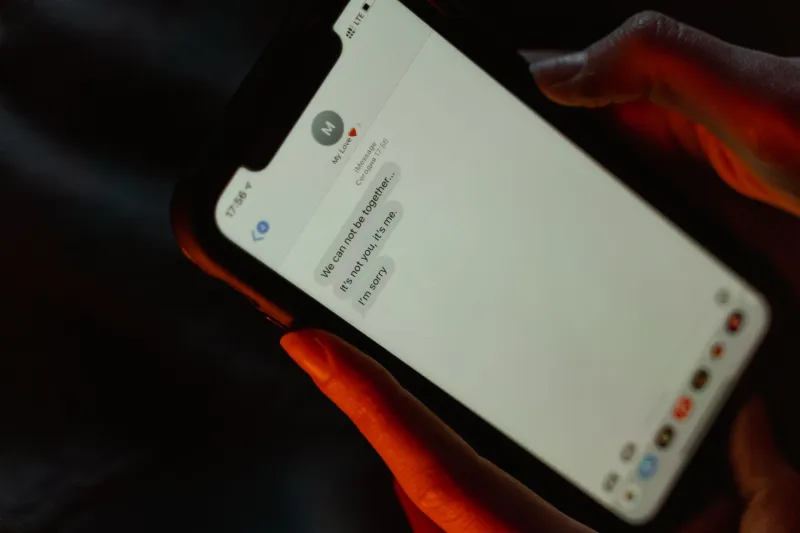
Are You a Good Friend — or Just a Good Performer?

There's a moment a lot of us have had recently — probably late at night, phone in hand — where we scroll through a conversation thread and start doing math. When did they last text first? Did I go to their thing last month? Have they even liked my posts this week? It's not jealousy exactly. It's more like... auditing. And somewhere along the way, we started doing it constantly.
Friendship used to be this messy, unscored thing. You hung out because you wanted to. You called because something reminded you of them. Nobody was keeping receipts. But now? A lot of us are walking around with an invisible spreadsheet, quietly logging every interaction as either a deposit or a withdrawal in a social ledger we never agreed to open.
When Did We Start Treating Friends Like Metrics?
The shift didn't happen overnight. It crept in through the same culture that gave us productivity apps, self-optimization content, and the relentless idea that everything — including your personal life — can and should be measured. When you spend enough time in spaces that quantify everything from your sleep quality to your weekly screen time, it starts to feel natural to apply that same framework to relationships.
Gen Z, in particular, grew up in an environment where social value was literally visible. Follower counts, reaction numbers, view tallies — these weren't abstract concepts, they were the daily wallpaper of growing up online. So it makes a certain kind of sense that those metrics would bleed into how we evaluate the people closest to us. Not because we're cold or calculating, but because that's the language we learned to speak.
Now, the questions sound less like "do I enjoy being around them?" and more like "are they matching my energy?" or "do they initiate as much as I do?" Those aren't inherently bad questions. But when they become the primary way you assess a friendship, something starts to feel off.
The Initiation Obsession
Nothing reveals this shift more clearly than how much we've fixated on who texts first. It sounds almost silly when you say it out loud — but ask anyone in their twenties and they'll tell you it's a whole thing. There's an unspoken rule in a lot of friendships now: if you're always the one reaching out, that's a red flag. It means they don't value you as much as you value them. It means the relationship is unequal.
And sometimes that's true! Imbalance in friendships is real and worth paying attention to. But the problem is when we let the scoreboard override everything else. When we stop texting someone because we "went last" and it's technically their turn. When we decline plans not because we don't want to go, but because accepting would mean we initiated twice in a row and that feels like losing.
We've turned the simple act of reaching out into a power move — and in doing so, we've made connection feel like a negotiation.
Compatibility as a Checklist
It's not just about who texts first. There's also this growing tendency to evaluate friendships based on how well someone fits a mental checklist of compatible traits. Shared interests, similar values, overlapping aesthetics, mutual taste in media. The logic goes: if we don't have enough in common, maybe this friendship doesn't make sense.
But some of the most meaningful friendships in history — and honestly, in most of our own lives — don't survive a compatibility audit. Your college roommate who introduced you to your favorite band but couldn't care less about anything else you love. The coworker you've had the best conversations of your life with, even though you'd never hang out on purpose. The childhood friend who's nothing like you now but still knows you better than almost anyone.
Those relationships don't score well on paper. They thrive in the margins, in the unplanned moments, in the weird specific history two people build together over time. When we start filtering friendships through a compatibility checklist, we're not just being selective — we're potentially cutting off the most interesting connections we could have.
The Anxiety Tax
Here's the part nobody really talks about: this whole system is exhausting. Not just for the people being evaluated, but for the people doing the evaluating. Constantly monitoring your own social performance — am I being a good enough friend, am I showing up enough, am I too available, not available enough — is a full-time mental job with no vacation days.
The anxiety that comes with it is subtle but persistent. You replay a conversation wondering if you said the wrong thing. You hesitate before sending a meme because you don't want to seem desperate for their attention. You feel a weird sting when someone doesn't respond quickly, even when you know they're busy, even when you'd do the exact same thing.
We've made friendship feel like a performance review we're always on the edge of failing. And that's not a friendship problem — that's a culture problem.
What We've Actually Lost
The cost of all this quantifying isn't just anxiety. It's spontaneity. It's the kind of friendship that doesn't need to be managed, that can survive a few weeks of silence without anyone spiraling, that can handle an imbalanced month because both people trust the foundation they've built.
There's something genuinely good about the broader conversation around reciprocity in relationships — knowing your worth, not pouring into people who drain you, setting boundaries. That's all real and necessary. But somewhere in translating those ideas into daily life, a lot of us overcorrected. We went from "I deserve healthy friendships" to "I'm going to score every interaction and act accordingly," and those are very different things.
The friendships worth having usually can't survive a spreadsheet. They're too human, too inconsistent, too full of the kind of context that doesn't compress into data.
Maybe the Point Isn't to Score — It's to Show Up
If you've been doing the math on your friendships lately, you're not a bad person. You're probably just a person who's been steeped in a culture that taught you metrics are how you know something is real. But relationships aren't apps. They don't have dashboards.
The friends who matter most to you — the ones you'd actually call in a crisis — probably aren't the ones who scored highest on your invisible rubric. They're the ones who showed up in ways that couldn't be predicted or planned. The ones who surprised you.
Maybe the move is less about tracking and more about just... reaching out. Not because it's your turn or because the algorithm of your friendship demands it. But because you thought of them, and that felt like enough.