The 'No Filter' Lie: How Radical Honesty Online Became Its Own Kind of Performance
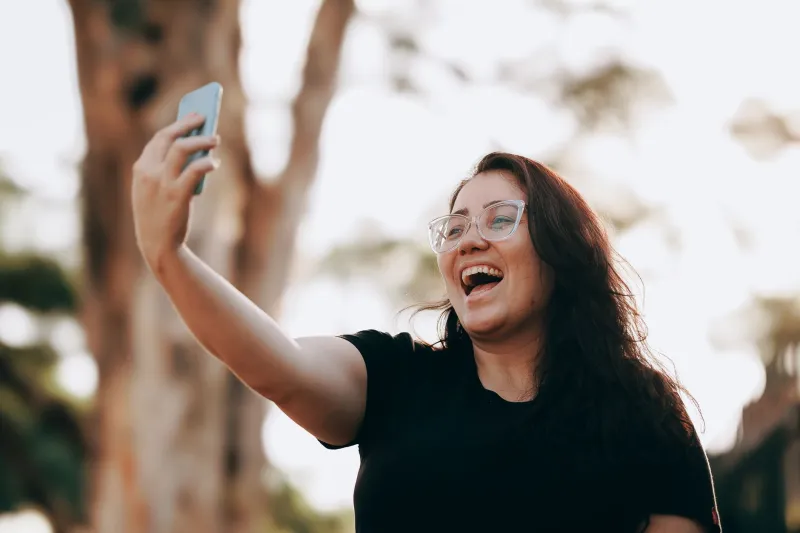
Somebody on your For You Page is crying right now. Not dramatic, movie-style crying — the good kind. The relatable kind. Mascara slightly smudged, voice a little unsteady, sitting in what appears to be their car because that's where people go to be real on the internet now, apparently.
The caption says something like not gonna lie, this week was a lot. The comments are full of hearts. The creator will post a follow-up tomorrow, probably a little sunnier, completing the emotional arc.
And you will watch it, feel something vague and warm, maybe share it, and move on with your afternoon.
This is what authenticity looks like in 2024. And it is, without question, a performance.
How We Got Here
The backlash to Instagram-era perfection was completely understandable. For years, social media was a highlight reel on steroids — filtered sunsets, flat-lay brunches, bodies that looked like they'd been rendered in software. People were exhausted by the gap between what they saw online and what their actual lives felt like.
So the culture shifted. Influencers started posting their "real" skin. Celebrities shared their therapy journeys. Mental health content exploded across every platform. The message was clear: perfection is over. Vulnerability is in. Be messy. Be honest. Be real.
And for about five minutes, it felt like a genuine cultural exhale.
Then the content machine did what it always does. It noticed the engagement numbers on authentic content, ran the optimization, and started manufacturing authenticity at scale.
The Aesthetic of Realness
Here's the thing about "unfiltered" content: it has a filter. It just looks different from the old one.
The no-makeup selfie has a lighting setup. The candid kitchen video has a ring light just off-frame. The emotional breakdown is posted at 7 PM because that's peak engagement time. The "I'm struggling" caption was drafted, reconsidered, and edited before it went up.
None of that makes the feeling behind it fake. People genuinely are struggling. They genuinely do want to connect. But the presentation of struggle has become its own genre, with its own conventions, its own aesthetics, its own unspoken rules about how much to reveal and when to pull back.
There's a specific cadence to the authentic influencer arc now: breakdown, processing, growth, gratitude. Repeat quarterly. It's a story structure. It's a content calendar with feelings in it.
And the audience, increasingly, can feel the scaffolding — even when they can't name it.
Performing Vulnerability Is Still Performing
Psychologists who study self-disclosure talk about the difference between authentic sharing and strategic vulnerability. Authentic sharing is when you tell someone something true because it's relevant and you trust them. Strategic vulnerability is when you deploy personal information to achieve a social outcome — connection, sympathy, credibility, engagement.
Both can involve real feelings. That's the part that makes this complicated. A creator can be genuinely going through something and be consciously packaging it for maximum resonance. The feelings aren't fake. The framing is.
The problem is that when strategic vulnerability becomes the dominant language of online interaction, it creates a pressure to perform emotional labor just to feel legible. Regular people — not influencers, just folks who use social media like normal humans — start to feel like their actual messy, unnarrated feelings don't translate. Like they need to structure their pain correctly before they share it. Like realness has a format now.
That's a wild thing to have happened to human honesty.
The Isolation Hiding Inside All That Connection
Here's the cruelest part of the authenticity trap: it promises connection and frequently delivers the opposite.
When you watch someone pour their heart out on TikTok and feel moved by it, you've had an experience. But it's a one-sided experience. They don't know you. You haven't shared anything. The transaction was entirely emotional consumption.
And when you try to replicate that in your own life — when you post your own vulnerable moment, waiting for the hearts and the "this is so real" comments — you might get them. But you're still alone on the other side of the screen, waiting for your phone to tell you that you connected with someone.
Meanwhile, the friend you've been meaning to call for three months still hasn't heard your voice.
The platforms want you to mistake reach for intimacy. Impressions for understanding. Comments for community. And the authenticity aesthetic is one of the most effective tools they have, because it feels so much warmer than the old highlight-reel approach.
So What Does Actual Realness Look Like?
Maybe the answer isn't to perform less authentically — it's to stop performing entirely, at least in some corners of your life.
Actual honesty is inconvenient. It happens at the wrong time, in the wrong format, without a good caption. It doesn't get engagement because it's not optimized for an audience. It's a 2 AM text to one person. It's saying something true in a conversation and not knowing how it'll land. It's vulnerability without a strategy.
That stuff doesn't go viral. It doesn't build a following. It just, occasionally, builds something real.
You can still post the car-crying video if you need to. But maybe notice what you're actually reaching for when you hit share — and whether there's someone in your actual life who should probably hear it first.