Why the Best Thing Happening Online Right Now Is Happening Somewhere You've Never Heard Of
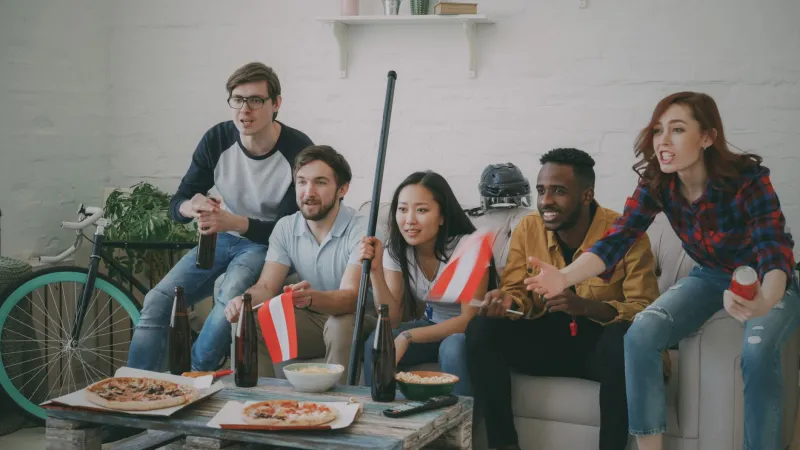
There's a Discord server with 340 members where people exclusively talk about the history of Chicago house music, share obscure vinyl finds, and argue — passionately, lovingly — about which 1988 DJ sets were the actual turning point for the genre. Nobody's getting paid to be there. Nobody's building a brand. The server has been running for four years and the same core group shows up every week.
There's a subreddit, deep in the long tail of Reddit's catalog, where amateur mycologists in the Pacific Northwest share photos of their finds, help each other identify species, and plan seasonal foraging meetups. It has 12,000 members and somehow feels more like a neighborhood than any neighborhood most of those members actually live in.
There are Substacks with 800 subscribers that read better than anything in your magazine app. There are Letterboxd lists that function as full-scale film criticism communities. There are group chats that have been running since 2019 with the same twelve people and a shared vocabulary so dense it would take a semester to decode.
This is where culture actually lives right now. And it's happening in places that don't show up in your algorithm.
The Mainstream Got Too Big to Mean Anything
At peak social media — let's call it 2015 to 2019, roughly — the promise was that the internet could finally let everyone participate in culture together. One viral moment, one shared meme, one massive hashtag could pull hundreds of millions of people into the same conversation at the same time.
That happened. And it turned out to be deeply unsatisfying.
When a piece of content has to appeal to a hundred million people, it has to sand down every edge. It has to be legible across age groups, regions, educational backgrounds, and cultural contexts that have almost nothing in common. The result is content that feels weirdly frictionless — easy to consume, impossible to care about deeply, forgotten by Thursday.
The algorithm optimized for scale and accidentally optimized against meaning.
So people started looking for somewhere with more friction. Somewhere that required something from you — a password, an application, a shared interest, a willingness to actually learn the room before you started talking.
Small Is the New Loud
Gen Z figured this out faster than anyone, partly because they came of age watching millennials build massive personal brands and then watch those brands become hollow. They saw what happened when your internet presence scaled: you stopped being a person and started being a content vehicle.
The response wasn't to log off entirely — that's a millennial fantasy that never really materialized at scale. The response was to go sideways. To find the smaller, weirder rooms.
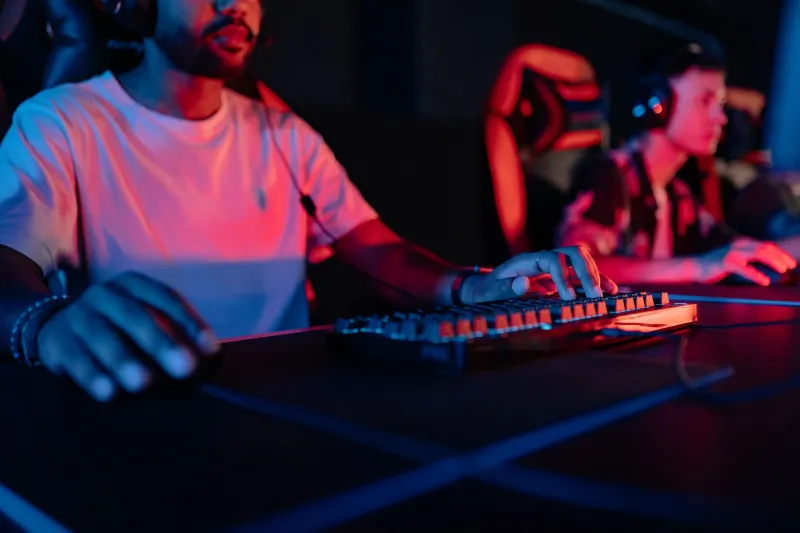
Discord became the architecture for this shift. Originally a gaming tool, it's now host to micro-communities built around everything from specific fashion eras to regional food cultures to niche literary fiction. The structure matters: channels, roles, verified members, community-specific norms. You have to actually join. You have to actually participate. Lurking is possible but it feels different — you're in a room with people, not scrolling a feed.
Reddit, for all its flaws, has always had this quality in its better corners. The difference between r/worldnews (chaotic, anonymous, often toxic) and a small, well-moderated subreddit dedicated to a specific craft or interest is the difference between a stadium and a living room. Same platform, completely different social experience.
The Vibe Economy
What these spaces have that big platforms don't is something that sounds soft but is actually structural: shared context.
When you're in a community built around a specific interest, aesthetic, or cultural reference point, you don't have to explain yourself constantly. You don't have to justify why you care about the thing. Everyone there already gets it. That shared baseline creates a kind of conversational efficiency that just doesn't exist when you're posting to a general audience.
It also creates stakes. What you say matters in a small community in a way it doesn't when you're one voice in a million. People remember. Reputations form. Relationships actually develop. The social capital you build is real because the social context is real.
This is what younger users mean when they talk about "vibes" — it's not just an aesthetic preference, it's a description of whether a space has coherent social energy or not. Big platforms lost their vibes the second they scaled past the point where community norms could hold. Micro-spaces still have them.
What You Miss When You Only Play in the Algorithm's Yard
If you're still primarily living on TikTok, Instagram, and X — consuming what the algorithm surfaces, posting into the void, refreshing for engagement — you're probably having a fine time. But you might also feel a low-grade hunger that you can't quite name.
That hunger is for a room that knows you. For a conversation that goes somewhere. For the experience of showing up somewhere online and being recognized — not because you're famous, but because you're a regular.
The big platforms were never designed to give you that. They were designed to give you reach. Those are very different things, and conflating them has made a lot of people feel more connected and more lonely at the same time.
Finding Your Room
The good news is the rooms exist. They're not hard to find once you know to look for them — you just have to be willing to go somewhere that doesn't immediately reward you with dopamine hits and follower counts.
Start with what you actually care about, not what you think you should care about. Find the subreddit. Join the Discord. Subscribe to the niche newsletter. Show up consistently enough that people start to recognize your handle.
It's slower than going viral. It requires more from you. You might post something and get five responses instead of five thousand impressions.
But those five responses will probably be from people who actually read what you wrote. And that, in 2024, is genuinely rare enough to be worth something.