Once a Year, We Let an Algorithm Tell Us Who We Are
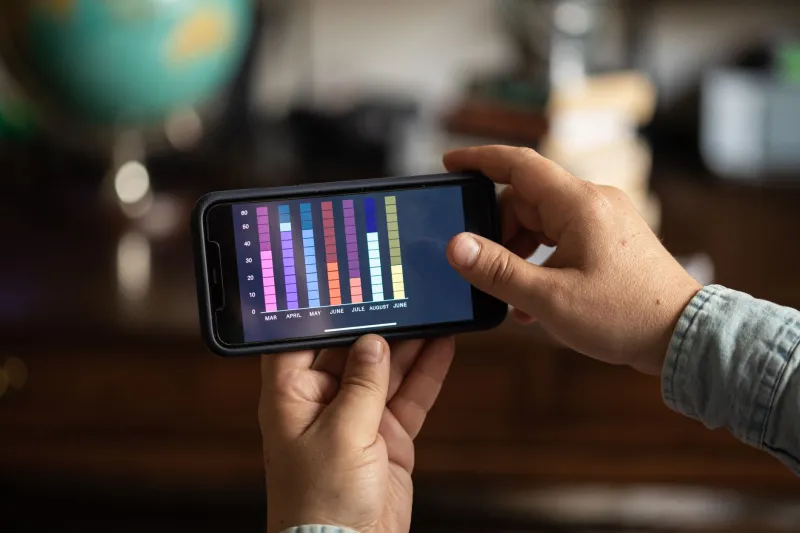
It happens every December like clockwork. The weather gets cold, Mariah Carey starts trending again, and suddenly your entire social media feed is flooded with colorful slides announcing that someone's top artist was Sabrina Carpenter, that another person apparently listened to a single Phoebe Bridgers song 847 times, and that your coworker — the one who talks endlessly about their "eclectic taste" — had Morgan Wallen in their top five.
Spotify Wrapped has become something it was never technically supposed to be: a cultural event. Not just a feature. An event. People plan for it. Some panic about it. A few quietly manipulate their listening habits in November just to make sure the final results look a little more interesting. And then, without fail, everyone shares it.
The question worth asking is a simple one: why do we care this much?
A Mirror Made of Data
There's something undeniably seductive about being summarized. In a world that constantly demands you define yourself — your brand, your vibe, your aesthetic — Wrapped shows up once a year and does the work for you. It takes 365 days of passive behavior and packages it into a story. Your story, allegedly.
The psychology here isn't complicated, but it is interesting. Humans are pattern-seeking creatures. We want to understand ourselves, and we're especially drawn to external validation of our self-perception. When Wrapped tells you that you're in the top 0.5% of listeners for a particular artist, it's not just giving you a statistic. It's giving you an identity badge. A sense of belonging to something. Proof that your feelings about that artist were real.
There's also the element of surprise — or the performance of surprise. Part of the ritual is reacting to your results like you're watching a reveal show. "Wait, I listened to WHAT that many times?" Even when the results are completely predictable, people perform the shock. Because the reveal is part of the fun. It's gamified self-reflection.
The Performance of Taste
Let's be honest about something: music taste has always been performative to some degree. What you listened to in high school said something about what group you wanted to belong to. The records on your shelf in your twenties were a carefully curated signal to anyone who walked into your apartment. Wrapped is just the latest version of that — except now the audience is everyone you've ever followed on Instagram.
Sharing your Wrapped results is, at its core, a form of personal branding. You're not just saying "here's what I listened to." You're saying "here's the kind of person I am." The indie listener who shares their obscure top five is communicating something different from the person proudly posting that Taylor Swift held the top spot for the third year running. Both are valid. Both are also, to some extent, a performance.
What makes Wrapped uniquely interesting is that it's one of the few times our digital behavior gets reflected back at us without any real curation on our part. You can't fake the data. You can't edit the numbers. Whatever you actually played — at 2am when you were sad, during your commute, in the background while you cooked dinner — that's what shows up. There's a strange vulnerability in that. Which might be exactly why people feel compelled to share it and contextualize it before anyone else can interpret it for them.
What the Numbers Don't Say
Here's the thing about reducing yourself to data: data is never the whole story.
Your most-played song of the year might be a track you listened to obsessively for two weeks during a breakup and then never touched again. Your top artist might be someone you genuinely love — or someone whose album just happened to be playing in the background every morning. Minutes streamed says nothing about which songs made you pull over because you needed a moment. The algorithm counts plays, not meaning.
There's also the question of what Wrapped leaves out entirely. It doesn't account for the vinyl you played at home, the CDs in your car (yes, some people still), the songs you heard at a bar and shazamed but never added to a playlist, the concert you went to that changed how you felt about an artist. Wrapped is a portrait, but it's painted with a very limited palette.
And yet we treat it like a confession. Like it reveals something essential and true.
The Ritual We Didn't Know We Needed
Maybe that's fine, though. Maybe the appeal of Wrapped isn't really about accuracy — it's about the ritual itself.
American culture doesn't have a ton of built-in moments for collective reflection. New Year's is close, but it's more forward-facing, all resolutions and fresh starts. Wrapped is retrospective. It asks you to look back at the year through the specific lens of what moved you enough to press play. That's not nothing. In a culture that's constantly pushing you toward the next thing, there's something genuinely valuable about a forced pause.
The communal aspect matters too. When everyone shares their results at the same time, it creates a brief, weird window where music becomes a shared conversation again. You find out your friend is also obsessed with that artist you thought only you knew about. You discover your sister's year had a completely different emotional soundtrack than yours. For a few days, playlists become a kind of small talk — and small talk, at its best, is how people connect.
The Bigger Picture
Spotify Wrapped is ultimately a product. It's a marketing campaign designed to keep you engaged with the platform and to generate organic social media content that costs the company nothing. Knowing that doesn't make it less fun, but it's worth holding onto.
We are, in some sense, doing free advertising for a billion-dollar company every time we post our results. We're also handing over our emotional data, our habits, our patterns — packaging them up into shareable content and distributing them across the internet. The data that feels like a personal reflection is also, simultaneously, a dataset.
But here's the thing: most cultural rituals have a commercial layer underneath them. That doesn't automatically hollow them out. What matters is what people actually do with the moment.
And what most people seem to do with Wrapped is use it to feel something — nostalgia, pride, embarrassment, connection. They use it to spark conversations, to share a piece of their year, to say this is what my 2024 sounded like in a way that a status update never quite could.
An algorithm built a funhouse mirror, and we lined up to look into it anyway. Maybe that says something about us. Or maybe it just says we're human — always looking for stories about ourselves, wherever we can find them.