You've Never Met Them, But You Know Every Word: The Strange Intimacy of Modern Music Fandom
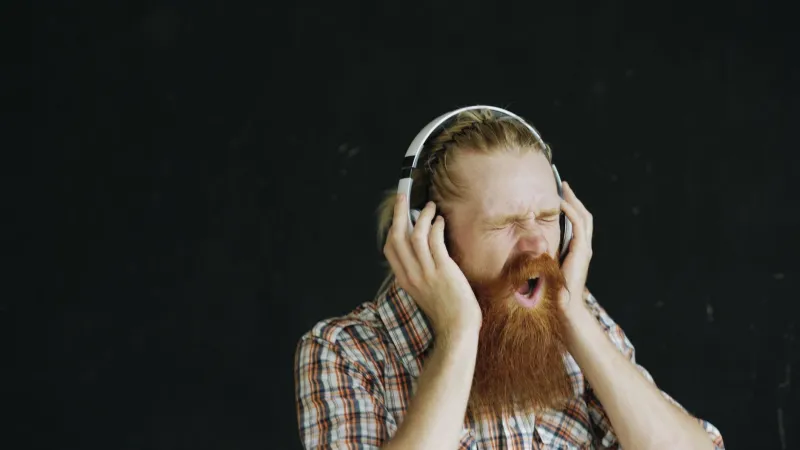
Something weird happens when your favorite artist drops a new album. You don't just press play — you research. You pull up the annotated lyrics on Genius. You watch the 47-minute documentary on YouTube where they cry in a studio in Iceland. You screenshot their 3 a.m. notes-app post and send it to your group chat with three crying emojis. By the time you've actually listened to the record, you feel like you've already lived through it with them.
This is modern music fandom, and it is genuinely strange when you stop to think about it.
We've built emotional intimacy with people who don't know our names. And the wildest part? It doesn't feel one-sided. It feels like a relationship.
The Streaming Era Changed the Rules
Before Spotify, before Apple Music, before every artist had a TikTok account where they lip-synced to their own unreleased demos, the gap between fan and artist was enormous. You had the album, maybe a music video, and if you were lucky, a concert stop in your city. The mythology of the musician was built on distance. You filled in the blanks yourself.
Now there are no blanks. The behind-the-scenes content never stops. There are Spotify Singles, Apple Music interviews, Amazon Music exclusives. There are documentary series on Netflix and Hulu that run multiple episodes deep. There are Instagram Lives filmed from bedroom floors and Twitter voice notes and TikToks shot in the back of tour vans. Artists are constantly broadcasting, and fans are constantly receiving.
What streaming platforms really sold us wasn't just access to music — it was access to musicians. And we bought in completely.
Why It Hits Different Than Other Fame
Celebrity culture has always created parasocial dynamics. People have been obsessing over actors and athletes and public figures forever. But music does something the others don't quite replicate.
Songs are personal in a way that movies and sports games aren't. When an artist writes about heartbreak, grief, anxiety, or joy, they're handing you something that feels private. When you hear a lyric that perfectly describes something you've never been able to articulate, the instinct is to feel seen by the person who wrote it — even if they wrote it years before you ever heard it, about someone you'll never know, with no idea you existed.
That emotional shortcut is powerful. And streaming culture has figured out how to maximize it at every turn.
Think about how Taylor Swift operates. The easter eggs buried in music videos. The deliberate ambiguity in liner notes. The way Eras Tour felt less like a concert and more like a shared memory for people who had never actually shared any experiences with her. Or consider how Beyoncé's Lemonade turned a visual album into a cultural reckoning that made millions of strangers feel like they were personally invited into her most painful chapter. Or how Olivia Rodrigo's debut felt less like a pop record and more like a diary someone accidentally left on the bus.
These aren't accidents. This is the architecture of modern artist-to-fan connection, and it's been carefully, intentionally built.
The Documentary Effect
If streaming playlists opened the door, music documentaries blew the walls off entirely.
In the last several years, we've gotten deeply personal films about Billie Eilish, Taylor Swift, Ariana Grande, Harry Styles, and dozens of others. These aren't old-school rockumentaries full of tour chaos and hotel-room trashing. They're quiet, intimate, and emotionally raw. Cameras follow artists through creative breakdowns and family conversations and moments of genuine doubt. You watch someone cry over a lyric they can't get right, and suddenly you feel like you've witnessed something you weren't supposed to see.
That feeling — of being let in — is exactly what creates parasocial attachment. Psychologists describe parasocial relationships as one-sided bonds where one person extends emotional energy and attention toward a media figure who is completely unaware of them. The term sounds clinical and a little cold. But the experience of it is warm. It feels like knowing someone.
And documentaries are engineered to produce exactly that feeling. The vulnerability is real, but the framing is deliberate. What you're watching is an invitation, not a leak.
So What Are We Actually Looking For?
It's worth asking the uncomfortable question: why do we need this so much?
Partly it's just the nature of fandom — there's always been a human desire to connect with the people whose art moves us. That's not new or pathological. It's kind of beautiful, actually.
But the intensity of it, the way it's accelerated in the last decade, probably says something about where we are culturally. Loneliness in the US has been climbing for years. The pandemic accelerated social disconnection in ways we're still processing. Real community — the kind you build slowly, in person, through accumulated shared experience — is harder to maintain in a world that keeps pulling us toward screens.
Artists, through streaming and social media, offer something that scratches a similar itch without requiring the same vulnerability. You can feel close to someone without the risk of rejection. You can feel understood by a song without having to explain yourself to another person. You can belong to a fandom — a Swiftie, a Beyhive, a Directioner — and have an instant community with millions of strangers who share your reference points.
That's not a criticism. It's actually kind of remarkable that music can do all of that. But it's worth recognizing that what we're chasing, underneath all the playlist curation and documentary rewatches and lyric annotation rabbit holes, is the same thing we've always been chasing: the feeling that someone out there gets it.
The Playlist as Portrait
Here's the thing about all of this: the parasocial playlist you've built — the one full of artists whose entire back catalogues you know, whose personal timelines you could recite, whose creative evolution you've tracked like a friend — that playlist says more about you than it does about them.
The music we return to is a map of our own emotional landscape. The artists we feel closest to are the ones who helped us understand ourselves better, even if they did it from a stage they'll never share with us.
We never actually knew them. But we learned something real through listening. And honestly? That might be enough.