Thirty Seconds at a Time: How We Learned to Consume Everything and Finish Nothing
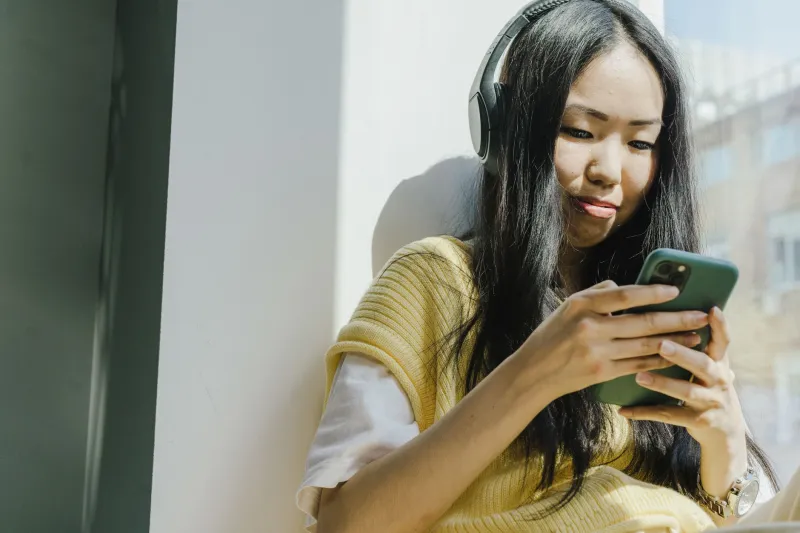
Here's a confession that probably hits close to home: there are currently four half-finished novels on my nightstand, a TV series I've been "watching" for eight months, and a Spotify library so bloated with saved songs I'll never revisit that it's basically a digital graveyard. And yet, somehow, I feel more culturally informed than ever. I know the discourse. I've heard the snippets. I caught the vibe.
This is life with a playlist brain — and if you're reading this, you almost certainly have one too.
The Shuffle Generation
It's worth remembering that this isn't entirely our fault. The entire architecture of modern media was rebuilt around the assumption that our attention is both infinite and infinitely divisible. Streaming services dropped the whole season at once, then optimized autoplay to keep us moving. TikTok trained an entire generation to evaluate whether a song, a show, or a person was worth their time within the first eight seconds. Spotify's algorithm learned that we'd rather discover five new artists in an hour than sit with one for the whole afternoon.
We adapted. Of course we did. Humans are nothing if not efficient at absorbing the rules of whatever environment they're dropped into. The environment said: more, faster, next. We said: sure.
The playlist became the dominant metaphor for how we engage with culture — not just music, but everything. TV shows get watched like playlists. We skip episodes, jump between series, and abandon seasons mid-arc without guilt. Books get read in fragments, if at all, supplemented by summary videos and Twitter threads that promise to deliver the key ideas in under three minutes. Even social media feeds are essentially playlists — algorithmically curated, endlessly shuffled, designed to keep you in motion.
What We Actually Lose When We Skip
There's a real case to be made that this is fine. Cultural fluency has always involved sampling widely, and knowing a little about a lot isn't a new phenomenon. Critics have been writing about "the death of the album" since at least the iTunes era, and music is still very much alive. Shows still get made. Books still get written. The sky hasn't fallen.
But something has shifted in how deeply any of it lands.
Think about the last time a piece of media genuinely changed the way you thought about something. Not entertained you, not gave you something to talk about — actually moved the furniture around inside your head. Chances are, it required sustained attention. It was a full album listened to start-to-finish on a long drive. A novel you stayed up too late finishing. A season of television you watched obsessively over a week, turning it over in your mind between episodes.
That kind of impact is hard to get from a highlight reel. Depth takes time. Narrative momentum builds. Themes accumulate meaning across an hour, a season, four hundred pages. When we graze instead of commit, we get the surface without the sediment — and the sediment is often where the good stuff lives.
The Anxiety Underneath the Scroll
Here's what nobody talks about enough: the playlist mentality isn't just a consumption habit. For a lot of people, it's also a coping mechanism.
Committing to a long book or a slow-burn series requires a kind of mental stillness that genuinely feels harder to access than it used to. Sitting with something that doesn't immediately reward you — that asks you to be patient, to tolerate ambiguity, to trust that the payoff is coming — can produce a low-grade anxiety that's much easier to resolve by just... opening another tab.
The endless queue is, in some ways, a comfort. There's always something else. You never have to sit with the discomfort of a story that isn't clicking yet, because the algorithm has already queued up something that might click faster. We've been trained to optimize for immediate engagement, and our nervous systems have started to internalize that preference.
This is where the wellness angle gets real. The research on deep reading, for instance, consistently shows that it builds empathy, reduces stress, and improves cognitive function in ways that skimming does not. Sustained attention isn't just good for cultural consumption — it's good for your brain. And it's a muscle that atrophies when you don't use it.
Are We Actually More Culturally Fluent, Though?
Fair counterpoint: the playlist generation is genuinely good at something that previous generations weren't — moving fluidly across genres, eras, and formats without the gatekeeping that used to define cultural taste. A 22-year-old today might have working knowledge of '70s soul, hyperpop, prestige TV, literary fiction, and underground film, all absorbed through the beautiful chaos of the algorithm.
That's not nothing. Cultural cross-pollination happens when people graze widely, and some of the most interesting art being made right now comes from creators who were raised on everything simultaneously.
But fluency and depth aren't the same thing. Knowing the reference isn't the same as understanding the context. And a culture that's very good at recognizing things but less practiced at sitting with them is a culture that might be better at conversation than contemplation.
Finding Your Long-Form Again
Nobody's suggesting you throw out your Discover Weekly or delete your watchlist. That's not realistic, and honestly, it's not necessary. But there's something worth protecting in the deliberate choice to go deep — to pick a thing and stay with it, even when it's slow, even when it doesn't immediately deliver.
Maybe that looks like committing to one album on your next commute, no skipping. Maybe it's finally finishing that book that's been on your nightstand since last winter. Maybe it's watching a show one episode at a time, with actual days between episodes, letting it breathe.
The playlist isn't going anywhere. But neither is the part of you that wants to be genuinely moved by something — not just briefly entertained by it. Those two things can coexist. You just have to be a little intentional about which one you're feeding.
Because the scroll will always be there. The thing you almost finished, almost felt, almost let all the way in — that one's a little harder to get back.