They Never Knew You Existed — So Why Does It Feel Like a Real Breakup?
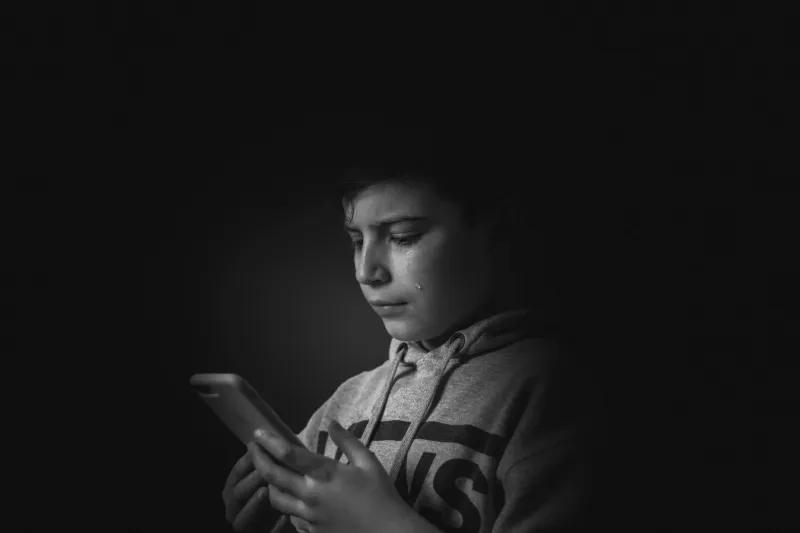
Something strange happens when a famous person dies. Your phone buzzes. Twitter — or whatever we're calling it this week — erupts. And before you've had a single cup of coffee, you're sitting there processing an emotion you can't quite name. Grief feels too dramatic. Sadness feels too small. But whatever it is, it's real, and it catches most people completely off guard.
We've been trained to feel a little embarrassed about this. "You didn't even know them," someone inevitably says, usually in a comment section, usually with a smugness that suggests they've never once cared about anything. But that dismissal misses the point entirely. The feelings are real. The science backs it up. And the way modern culture is built almost guarantees this is only going to get more intense.
The Brain Doesn't Know the Difference
Here's the thing about parasocial relationships — the term psychologists use to describe one-sided emotional bonds with public figures — your brain processes them in ways that are surprisingly similar to how it handles actual friendships. When you've spent years watching someone's content, listening to their music on repeat during hard times, or following their life updates through interviews and Instagram stories, neural pathways get built. Familiarity registers as connection.
Researchers have been studying this since the 1950s, when sociologists Donald Horton and Richard Wohl first coined the term "parasocial interaction" to describe how television audiences developed genuine feelings toward on-screen personalities. What they couldn't have predicted was what the internet — and specifically social media — would do to turbocharge the whole phenomenon.
When Matthew Perry died in 2023, the grief online was staggering. Friends had been a comfort show for decades, but Perry's openness about addiction and recovery in his memoir had added a new layer. People felt like they knew him — the real him, not just Chandler Bing. When Tina Turner passed, it wasn't just nostalgia. For many women, particularly Black women in America, she represented something deeply personal about resilience and reinvention. The loss landed differently because the relationship, though one-sided, had meaning.
Social Media Turned the Volume Way Up
Before the internet, parasocial bonds had natural limits. You saw a celebrity in movies, maybe caught them on a late-night interview, read a profile in a magazine. There were buffers. Now? A creator posts their morning routine, their therapy breakthroughs, their relationship struggles, their unfiltered opinions at 2 a.m. The access is relentless.
This isn't just about traditional celebrities either. The lines have completely dissolved. A YouTuber with 800,000 subscribers can feel more intimate than an A-list actor because they're talking directly to you, eye contact through a lens, calling their audience their "community." When that person steps away, announces a break, or — in the most tragic cases — is suddenly gone, the vacuum is enormous.
And then there's the collective dimension. Social media turns individual grief into a shared event. Thousands of people processing the same loss in real time, validating each other's feelings, creating a kind of digital vigil. That communal experience can intensify the emotion even further. You weren't just sad — you were sad with everyone.
What This Says About Loneliness
It would be easy to frame all of this as pathetic. A generation so disconnected from real community that they've outsourced their emotional lives to strangers with ring lights. But that reading is both too simple and too cruel.
The reality is that genuine community — the kind that used to come from neighborhood ties, religious institutions, stable long-term workplaces — has been quietly eroding for decades. Robert Putnam was writing about this back in 2000 with Bowling Alone, and things have only accelerated since. People are lonelier. Connection is harder to find and maintain. And in that vacuum, parasocial relationships have expanded to fill the space.
This isn't a character flaw. It's an adaptation. When your actual social circle is smaller than it used to be, when adult friendships are harder to build and maintain, when the people you live near feel like strangers — you find connection where you can. And sometimes that's a podcast host who feels like a friend you've had for years.
The Grief Is a Signal, Not a Symptom
So what do we do with this? First, probably, we stop pathologizing it. Feeling something when a public figure dies — especially one whose work genuinely shaped you — isn't a sign that you've confused fiction for reality. It's a sign that you're human and that you allowed yourself to be moved by someone's art, presence, or story.
But it's also worth sitting with the feeling long enough to understand what it's pointing at. Sometimes the grief for a celebrity is really grief for a version of yourself — the teenager who discovered their music, the kid who watched that show every week with their family. Sometimes it's grief for what that person represented: hope, irreverence, survival, joy.
And sometimes, if you're honest, it's a signal that you're hungry for more connection in your actual, offline life. That's not a comfortable thing to acknowledge. But it's a useful one.
We live in a world that sells us the illusion of intimacy at scale — millions of "followers," thousands of "friends," endless content that mimics closeness without delivering it. The grief we feel for people we never met is one of the stranger side effects of that world. But it's also, in its own way, proof that we still know how to care about something beyond ourselves.
That's not nothing. That might actually be everything.