You Stopped Watching. So Why Do You Feel Like the Bad Guy?
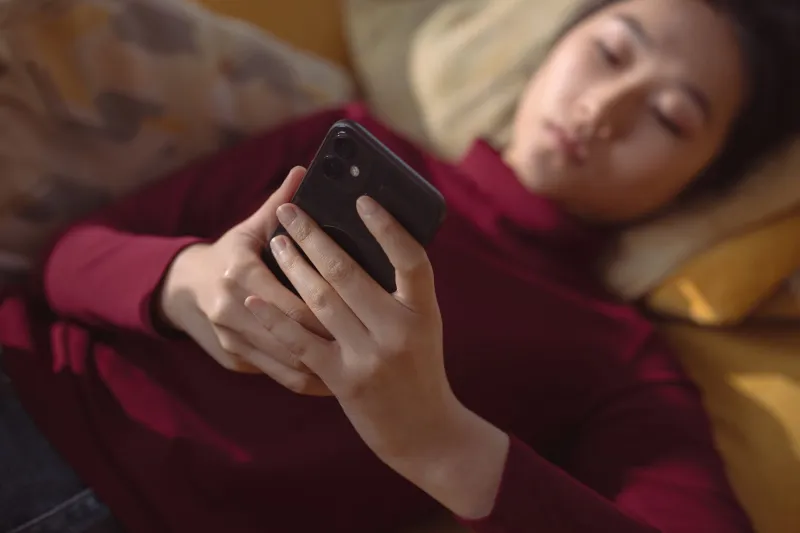
It usually happens on a random Tuesday. You're scrolling, a notification pops up, and instead of the little dopamine hit you used to get — that oh, they posted feeling — you just... scroll past. No guilt. No curiosity. Just nothing.
And then, almost immediately, the guilt shows up anyway.
Maybe you used to watch every single video this person uploaded. Maybe you knew their coffee order, their dog's name, the name of the ex they never technically named. You were invested. And now you're not. And somehow, inexplicably, that feels like something you owe an apology for.
Welcome to the parasocial breakup nobody really talks about — not the one where the creator does something terrible and the internet turns on them, but the quieter, weirder version. The one where you just... grew out of it. And feel weirdly bad about that.
The Relationship That Only Ever Ran One Direction
Here's the thing about parasocial connections: they're built entirely on your attention. You show up, you watch, you absorb. The creator talks at you — sometimes with remarkable intimacy — but the exchange is fundamentally lopsided. They don't know when you started watching. They definitely don't know when you stopped.
And yet, somewhere along the way, your brain started treating this like a real relationship with real obligations. You kept up with their drama like you'd keep up with a friend's. You felt secondhand pride when they hit a milestone. You maybe even defended them in comment sections to people you'd never meet.
So when the interest fades, your brain doesn't immediately register this was always a one-sided thing. It registers something closer to I'm abandoning someone who trusted me. Which is, objectively, a little wild — but also completely understandable once you realize how thoroughly modern media is designed to blur that line.
Why Moving On Feels Like Betrayal
A lot of creators are genuinely good at making you feel like an insider. The "storytime" format, the "I've never told anyone this" confessionals, the direct-to-camera eye contact that your nervous system registers as someone actually looking at you — these aren't accidents. They're the architecture of intimacy, scaled up and broadcast to millions.
When you've been let into someone's "real" life — their anxiety spirals, their apartment renovations, their complicated family stuff — stepping away doesn't feel neutral. It feels like you're closing a door on someone mid-sentence.
There's also the community dimension. If you were part of a fandom, a comment section, a Discord server built around this person, leaving isn't just about them. It's about the whole ecosystem you were part of. Drifting away can feel like ghosting a whole social circle, not just unsubscribing from a channel.
The Shame Is Real, Even If the Relationship Wasn't
Let's not dismiss the feeling just because it's technically irrational. Emotional experiences don't need to be logically justified to be real. If you feel guilty, you feel guilty. The question is whether that guilt is pointing at something useful or just... noise.
Most of the time? It's noise. People change. Interests evolve. The version of you that was obsessed with a particular creator's content was a real version of you — but it wasn't a permanent one. Growing out of something isn't a character flaw. It's just time doing its thing.
What's worth examining is the underlying belief that your attention is something you owe. That once you've given it, withdrawing it makes you disloyal. That's not a healthy framework for any relationship, parasocial or otherwise. Real loyalty isn't about indefinite consumption. It's not even a concept that applies here.
The Algorithm Doesn't Help
There's also a structural layer to this that's easy to miss. Platforms are not designed to make it easy to quietly move on. Unfollowing someone triggers a notification on some platforms. YouTube will keep recommending a creator you've stopped watching for months. Instagram will surface their posts anyway, just to test you.
The whole system is engineered around re-engagement — the assumption that if you've lost interest, you just need a little nudge back. Which means your decision to step away is constantly being second-guessed by an algorithm that has a financial stake in you staying plugged in.
Every time their face shows up in your feed after you've mentally checked out, you have to make the choice again. And making the same choice repeatedly — no, I'm done, I'm moving on — can start to feel like you're actively rejecting someone, rather than just naturally drifting.
Giving Yourself Permission to Just... Leave
Here's the reframe: you are not a subscriber. You are a person. Your attention is not a subscription service that auto-renews out of courtesy.
The fact that you spent real time and real emotional energy on someone's content doesn't create a debt. It doesn't mean you're obligated to keep showing up. People outgrow musicians they used to love, TV shows they used to quote constantly, entire aesthetics they built their personality around for a solid two years. This is the same thing, just with a person-shaped content delivery system attached.
And honestly? The creators who are actually worth your time would probably agree. The good ones — the ones who genuinely care about their audience — aren't trying to trap you. They want to make things you want to watch. If you don't want to watch anymore, that's information, not a betrayal.
The ones who've built their brand around manufactured loyalty and parasocial dependency? Yeah, they might not love you leaving. But that's kind of the point.
Moving On Is a Form of Self-Knowledge
There's something quietly valuable about noticing when something no longer serves you — and acting on it, even when it feels uncomfortable. The discomfort of a parasocial breakup, weird as it sounds, is actually a sign that you were genuinely engaged. You cared. You showed up. And now you're self-aware enough to recognize when that chapter has closed.
That's not failure. That's growth, which is famously kind of awkward in the moment.
So go ahead. Unfollow. Unsubscribe. Let the notification badge sit until it disappears. You don't owe anyone a farewell post, a comment explaining yourself, or a guilt spiral that lasts longer than the relationship did.
You were never really in a relationship to begin with. And that's okay — it was still real while it lasted.