The Mall Closed, But the Group Chat Never Sleeps: How Neighborhoods Went Digital
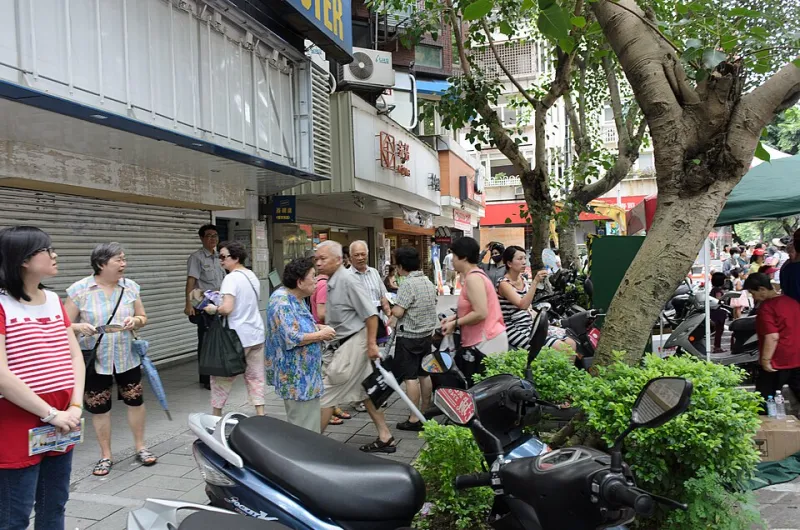
Photo: 玄史生, CC0, via Wikimedia Commons
The mall I grew up going to is now a medical office park. This is not a metaphor. The food court is a phlebotomy lab. The fountain where middle schoolers congregated is a waiting room with a fake plant in it.
Multiply that story across the country and you get the picture: American third places — the spots that aren't home and aren't work, where community used to happen by accident — are in full retreat. Malls are dying. Bowling leagues have thinned. Church membership, Elks lodges, rec softball, the corner diner with the counter seats: the physical infrastructure of casual togetherness is closing at a rate sociologists have been sounding alarms about for two decades.
And yet. My apartment building has a Discord server that is, genuinely, more active than any community space I've ever belonged to. Someone in it watered my plants last summer while I was away. I've never met her. I know her as a username and a Vibes rating, and I'd trust her with my keys.
Something is being rebuilt here. The question is what.
The Quiet Collapse of the Third Place
Ray Oldenburg, the sociologist who coined "third place," argued that these spaces were democracy's living rooms — unstructured, low-stakes, open to whoever showed up. Their genius was friction: you had to physically be there, which meant you ran into people you wouldn't have chosen.
The collapse had a hundred causes — car-dependent sprawl, screens, the price of a sit-down dinner, the simple fact that nobody's neighborhood diner survived the economics of 2024. But the effect is easy to name: the accidental encounters that used to stitch a neighborhood together just... stopped happening.
Enter the Notification Setting
What replaced them didn't look like community at first. It looked like Facebook groups and Nextdoor and a Buy Nothing page where a stranger gives away a crib to another stranger at 7AM.
But look closer and the new infrastructure is real. Apartment buildings run Discord servers for package drama and potlucks. Suburban towns have group chats faster than the municipal alert system. Buy Nothing groups move furniture, formula, and — occasionally — actual friendship. Hyperlocal Instagram accounts know which businesses opened and which pothole is winning.
Here's the argument I'll die on: vibes have become infrastructure. The neighborhood is no longer a place you walk through; it's a feed you're subscribed to. And it works. It works better than anyone predicted. The new mom finds the pediatrician recommendation in four minutes. The lost dog is home by lunch. The block's first-ever cookout is organized entirely in a thread titled "anyone else bored??"
What We Lose When Community Has a Mute Button
Still, I'd be lying if I said the trade was even.
The old third places were inefficient in ways that mattered. You couldn't mute the neighbor with the strong opinions. You had to share space with people outside your demographic, your politics, your algorithm. Digital community, for all its efficiency, lets us curate our neighbors in a way a physical diner never did. Every group chat eventually becomes an echo chamber with a pool table.
And there's the mute button itself. Old community was unconditional — you were part of the neighborhood whether you felt like it or not. New community is opt-in, which is healthier in some ways and flimsier in others. A community you can leave in two taps is a community that can vanish in two taps. Ask anyone who's watched a beloved local group collapse after one bad moderation decision.
The Hybrid Neighborhood Is Already Here
But maybe the binary is wrong. The most functional neighborhoods I've seen lately are the ones running both systems at once: the digital layer doing logistics, the physical layer doing belonging. The Discord organizes the potluck; the potluck is where you finally put a face to the username who had the good contractor rec.
The mall isn't coming back. The bowling league might not either. But the impulse those places served — the human need to be known by the people who live nearby — never went anywhere. It just changed addresses and got a notification setting.
Whether that's a downgrade or a renovation depends, honestly, on whether we ever log off long enough to knock on a door.
I'm going to try it this weekend. If you're in my building's server: you'll know how it went.